Meaning
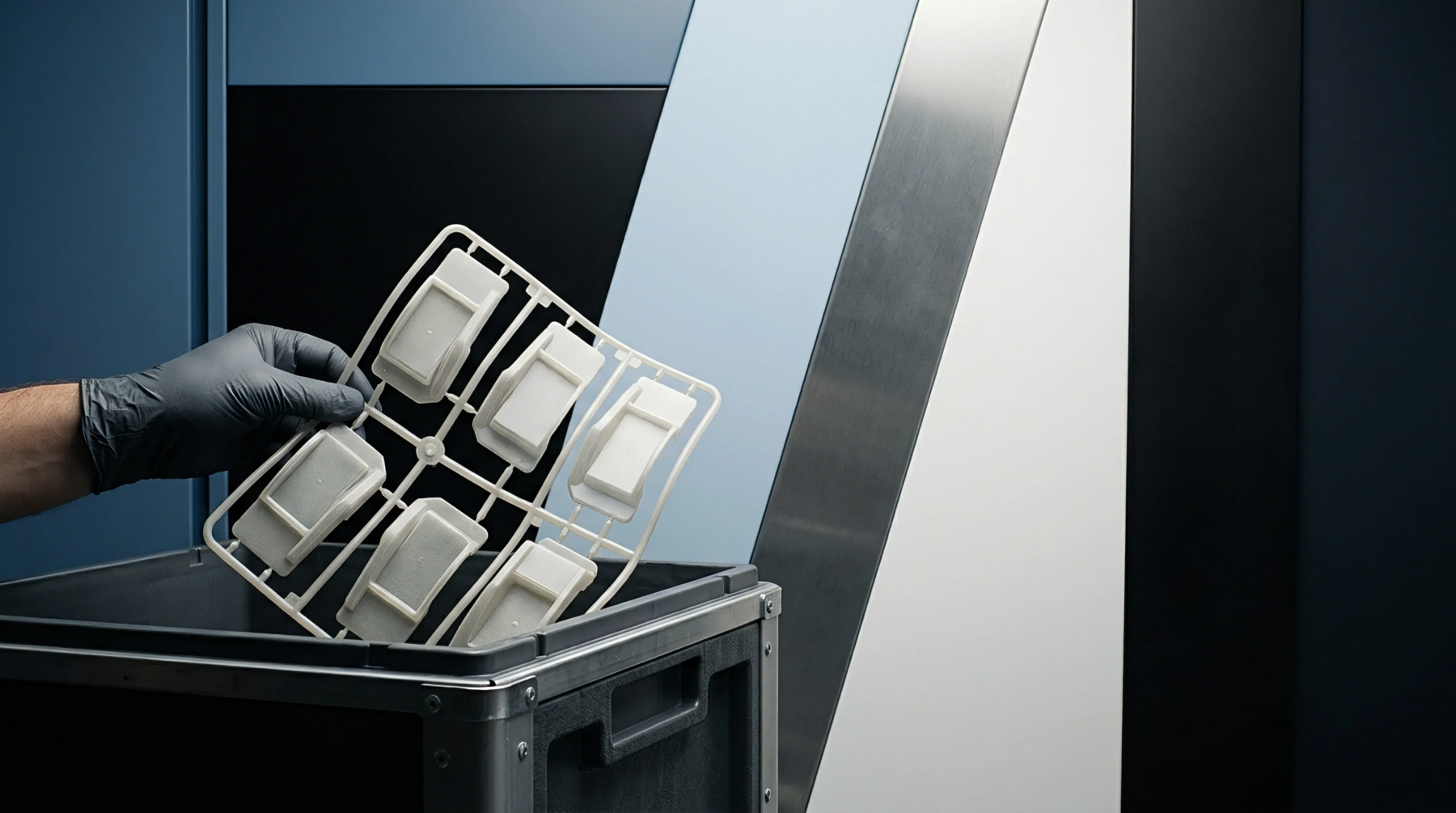
Cross-sectional channel geometry minimizes the surface-area-to-volume ratio in polymer delivery systems to retain thermal energy inside the molten stream during injection. Using a full round runner profile maximizes melt flow efficiency by maintaining a uniform cross section across the feed network. Boundary conditions apply to two-plate tools where machining matching semi-circular channels across both parting line faces increases toolmaking labor costs.
Machining Requirement
Tool steel cutter alignment determines channel concentricity across mold plates. Implementing a full round runner profile requires precision CNC milling on both parting faces.
Thermal Efficiency
Molten resin flowing through feed channels forms a stationary frozen skin layer along cool metal walls. Selecting a full round runner profile minimizes skin thickness relative to the flowing core volume, keeping the center stream fluid at lower barrel temperature settings. Amorphous polymers like polycarbonate benefit from this profile because melt viscosity remains manageable without elevating nozzle temperatures to levels that degrade polymer chains.
When processors increase regrind ratios, thermal insulation within the runner core prevents premature solidification during extended packing cycles, maintaining pressure transmission until gate freeze occurs.
Pressure Loss
Hydraulic resistance decreases when fluid moves through circular conduits rather than angular channels. Operating with a full round runner profile reduces hydraulic pressure drop across the feed system compared to trapezoidal geometries of equal cross-sectional area. Lower pressure loss allows moulders to fill thin-walled cavity sections using lower injection pressures, reducing machine clamp tonnage demands.