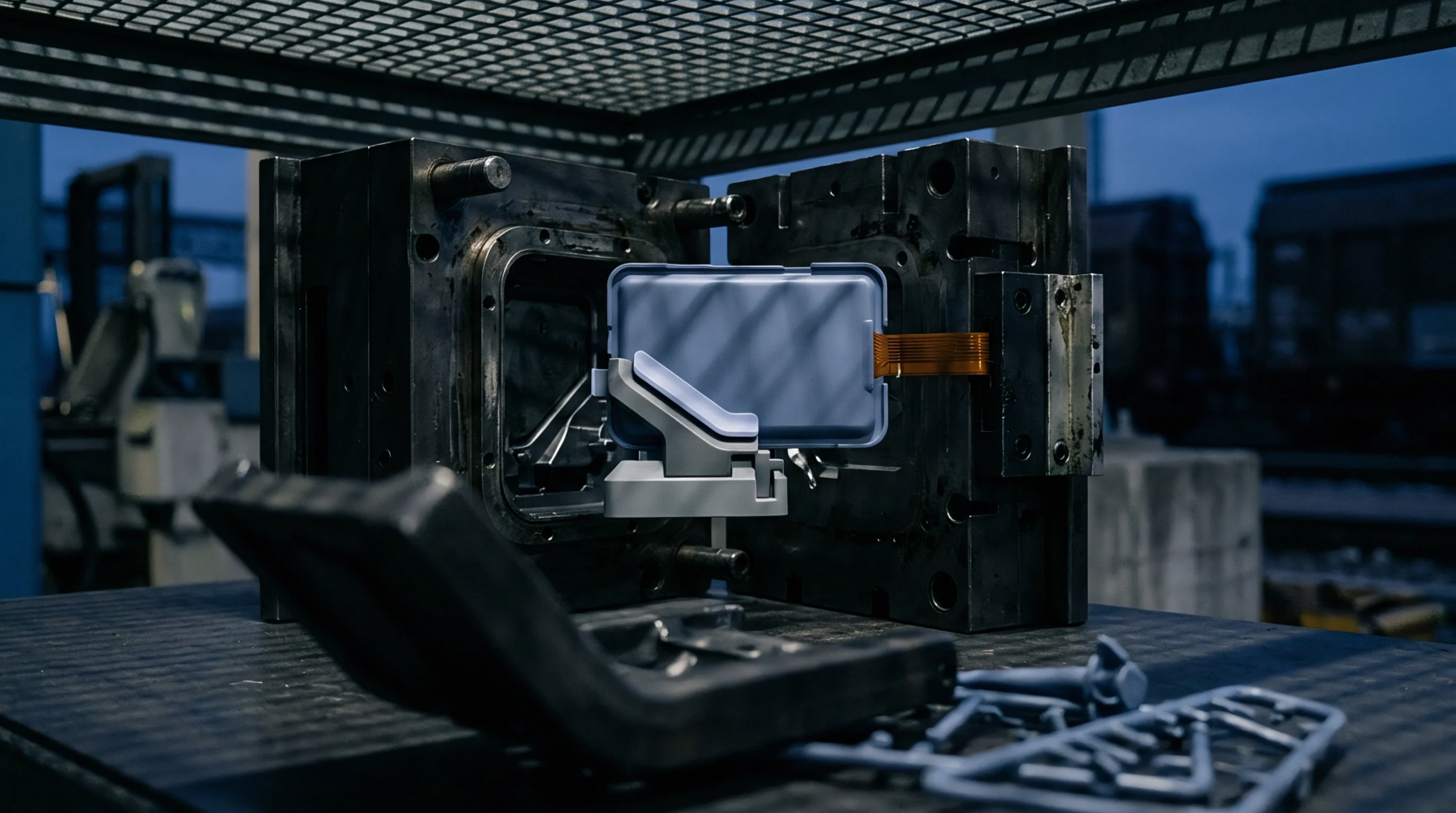
Meaning
Polyamide components that have undergone no post-moulding conditioning or moisture exposure are characterized by a specific thermodynamic state. This dry-as-moulded condition represents the material at its lowest water content, typically below one tenth of one percent by weight. The definition ceases to apply once the part is exposed to ambient air and begins to absorb atmospheric humidity.
Mechanical Behavior
Polymer chains in this moisture-free state remain tightly packed and experience high levels of intermolecular friction. Tensile strength and flexural modulus reach their maximum values while the material remains in the dry-as-moulded state. Impact resistance and elongation at break are at their lowest points under these dry conditions, making the part brittle.
Storage Requirement
Injection moulded parts must be sealed in moisture-barrier bags immediately after ejection to prevent natural humidification. If the parts are exposed to ambient air, moisture absorption acts as a plasticizer and alters the physical dimensions of the components. Preventing this moisture uptake is necessary when testing parts against original datasheet values.
Industrial Standard
Laboratory testing of plastic specimens according to international protocols dictates that mechanical evaluations occur either in this unconditioned state or after fully controlled environmental stabilization. Standardized procedures specify the exact time limit allowed between ejection from the mould and mechanical testing. This protocol ensures that the baseline properties of the virgin polymer are measured with high reproducibility.
A test engineer compares these values directly to the raw resin specification to confirm that the compounding process has not degraded the molecular weight of the polymer during the melt phase.