Meaning
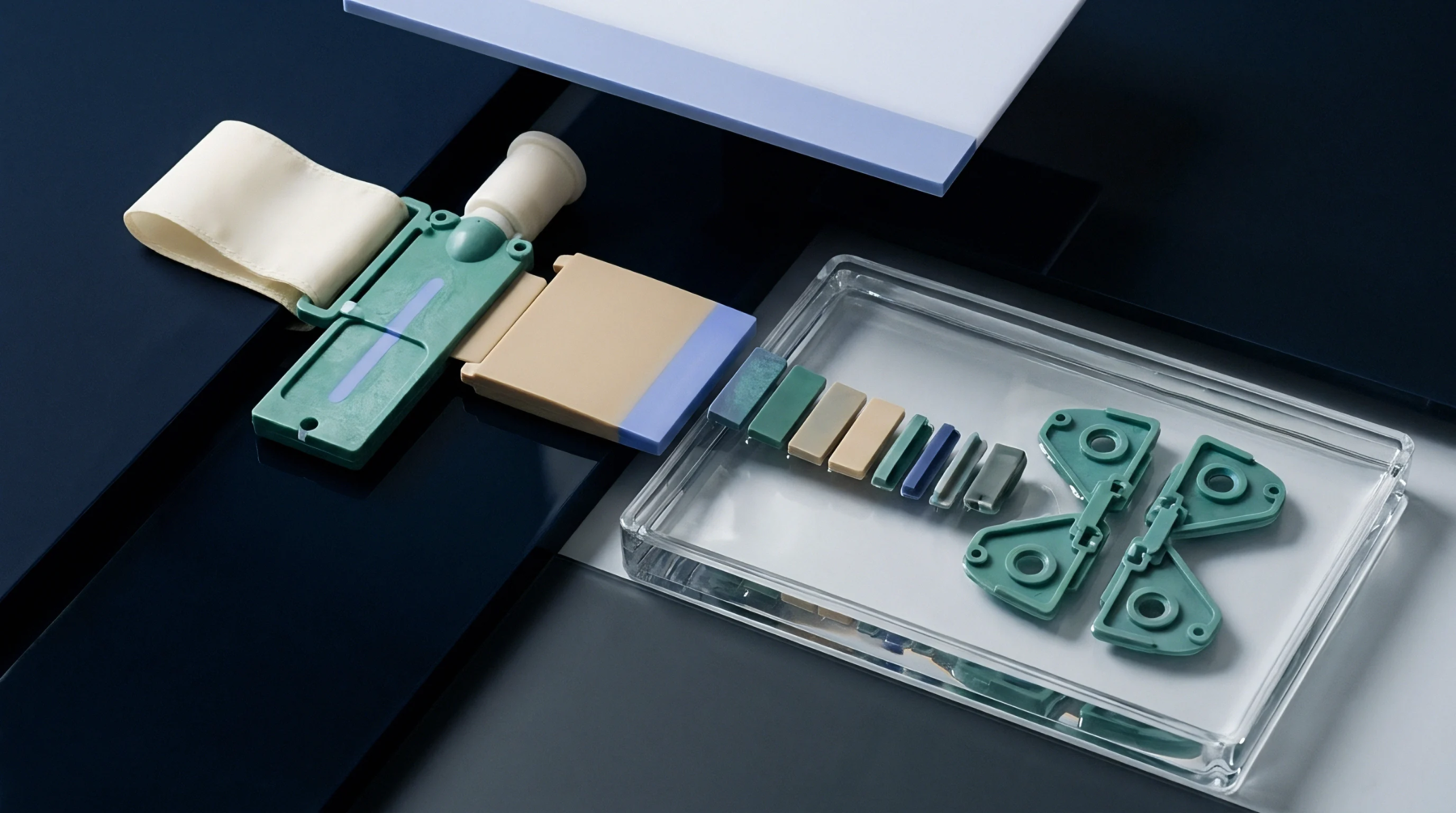
Amorphous thermoplastic resins known for high optical clarity, low moisture absorption, and excellent chemical resistance are utilized in specialized moulding applications within medical and optoelectronic industries. In these demanding environments, cyclo-olefin polymer offers a biocompatible alternative to glass and traditional polycarbonates. The material prevents fluid interaction because of its low polar surface energy.
Processing Parameter
Injection moulding of this high-performance resin demands precise thermal control of both the melt and the tool to avoid molded-in stress. Molders utilize high barrel temperatures and heated oil moulds to ensure complete cavity replication of delicate optical surfaces without freezing the gate prematurely. Because cyclo-olefin polymer has a high melt viscosity, the filling phase requires rapid injection speeds coupled with high packing pressures.
Failure to maintain these settings causes sink marks or localized density variations that disrupt the refractive index of the final lens. Careful control of the screw rotation speed prevents thermal degradation and minimizes the formation of black spots or yellowing.
Part Specification
High dimensional stability over a wide temperature range defines the performance of components made from this material. Finished parts must maintain sub-micron tolerances to function correctly in diagnostic arrays or camera assemblies.
Economic Impact
Virgin resin costs represent a major share of total manufacturing expenses, restricting use to high-value medical or optical products. Regrind utilization is typically avoided because contamination degrades the light transmission properties.