High Shear Rheology Calibration Thresholds for Recovered Polyolefin Industrial Blends
Calibrating high-shear capillary rheology via Bagley and Weissenberg-Rabinowitsch corrections prevents off-spec polyolefin lot processing failures.
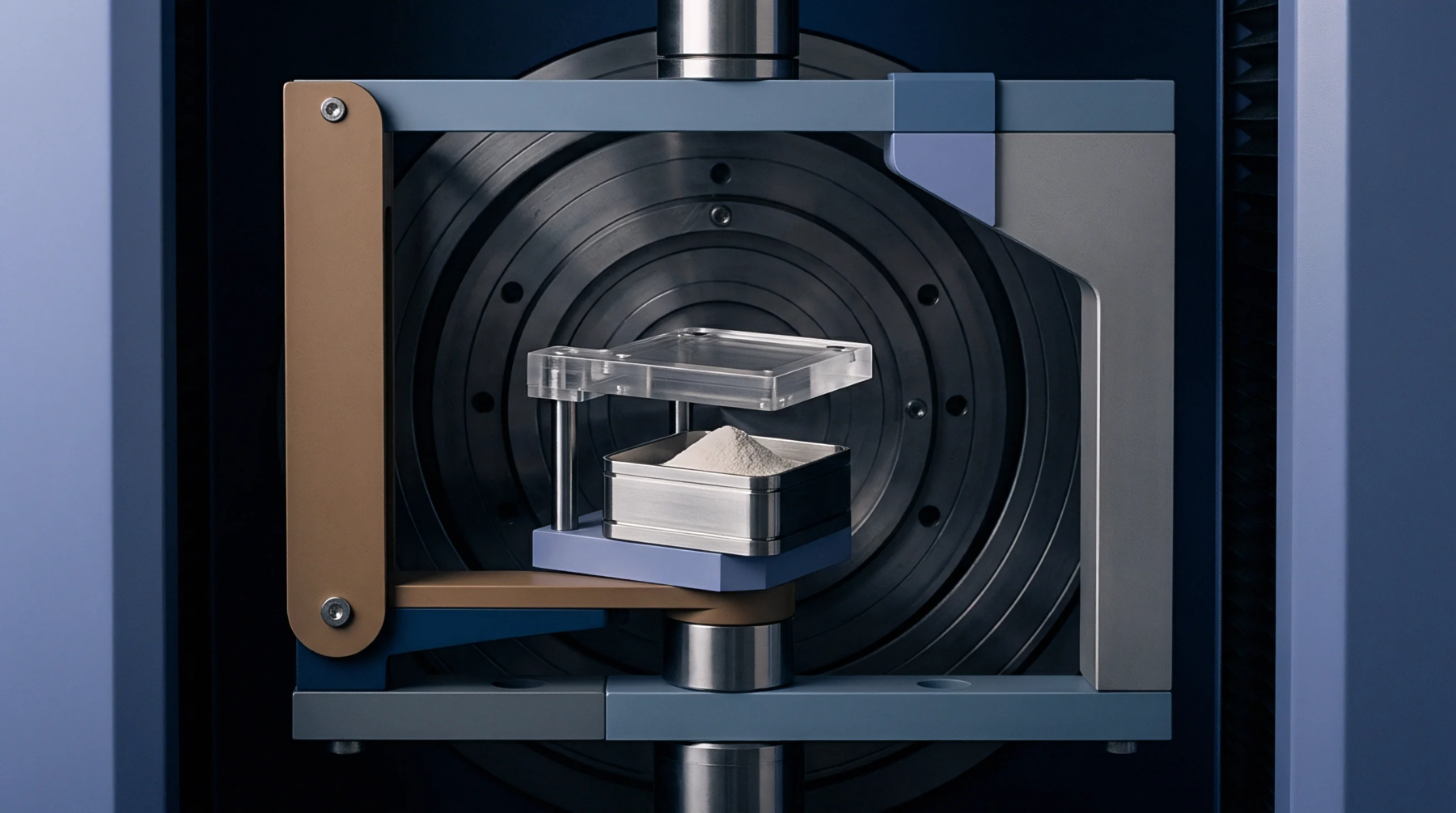
Rheological evaluation requires a mathematical parameter that quantifies non-Newtonian fluid behavior, and consistency index k fulfills that role in the power law constitutive equation governing polymer melts. Injection moulding presses and extrusion dies subject thermoplastic resins to intense shear rates, where high shear thinning reduces apparent viscosity dynamically. Laboratory capillary rheometers measure pressure drops across calibrated dies at varied piston speeds to calculate apparent shear stress and shear rate data points.
Linear regression applied to the logarithmic plot of shear stress against shear rate yields the slope known as the flow behavior index alongside the intercept that defines consistency index k. Units of this property combine Pascal seconds raised to the power of the flow behavior index, reflecting the fluid resistance to flow under specified thermal conditions. Resin suppliers publish consistency index k values on technical datasheets for virgin polyolefins and engineering thermoplastics, establishing baseline processability targets before compounding additives alter melt characteristics.
Material specifications rely on consistency index k to maintain lot-to-lot uniformity, because shifting molecular weight distributions alter the intercept without necessarily changing the slope of the shear curve. Part specifications diverge from material specifications by demanding finished-part dimensional stability, which depends on consistency index k remaining stable despite thermal history variations introduced during processing. Virgin polymer batches exhibit predictable consistency index k values aligned with datasheet tolerances, whereas regrind streams introduce polymer chain scission that depresses the intercept and degrades melt strength.
Moulders control barrel temperatures to compensate for minor consistency index k fluctuations, but severe deviations overwhelm machine control limits and cause processing failures. Flash, short shots, and dimensional warping appear on moulded parts when unmonitored consistency index k drift alters cavity pressure transmission during the packing phase.
Mathematical modeling of polymer flow through runner systems and gate geometry depends on consistency index k to predict pressure losses during the injection phase. Shear rates inside small gating channels exceed ten thousand inverse seconds, scaling apparent viscosity downward according to the power law model. Higher consistency index k values increase the pressure required to fill complex mould cavities, frequently triggering high pressure alarms on hydraulic injection units.
Extrusion lines processing high consistency index k resins generate excessive viscous heat dissipation within the screw channels, necessitating rigorous barrel cooling zone regulation to prevent thermal degradation. Lower consistency index k grades flow readily under minimal injection pressure, but insufficient melt strength causes sagging in profile extrusion and sink marks in thick-walled injection moulded parts.
Temperature variations alter free volume between polymer chains, causing exponential changes in consistency index k that must be managed through precise thermal control. Arrhenius relationships describe how elevated barrel temperatures reduce consistency index k, lowering the resistance to flow through the nozzle and manifold assemblies. Excessively high melt temperatures reduce consistency index k past the processing threshold, stripping the polymer of the melt elasticity required to prevent melt fracture during extrusion.
Conversely, insufficient barrel heater output elevates consistency index k prematurely, causing high torque loads on the plasticating screw and potential motor stall.
Thermal and mechanical stress during previous moulding cycles breaks polymer chains, lowering the molecular weight and decreasing consistency index k in recycled resin streams. Blending post-industrial regrind with virgin pellets alters the effective consistency index k of the mixture, shifting the viscosity profile away from established machine parameter recipes. Moulders maintaining tight dimensional tolerances monitor consistency index k on incoming regrind lots to adjust clamping tonnage and injection velocity profiles proactively.
Unmonitored regrind variability shifts consistency index k downward, causing over-packing of the mould cavity, residual stress accumulation, and premature part failure under mechanical load.
Calibrating high-shear capillary rheology via Bagley and Weissenberg-Rabinowitsch corrections prevents off-spec polyolefin lot processing failures.
Expertise is a utility, not a secret. sentiention™ publishes its working knowledge as open reference: intelligence layer covering the materials it sources, the markets it enters, and the reference that serves both.