Meaning
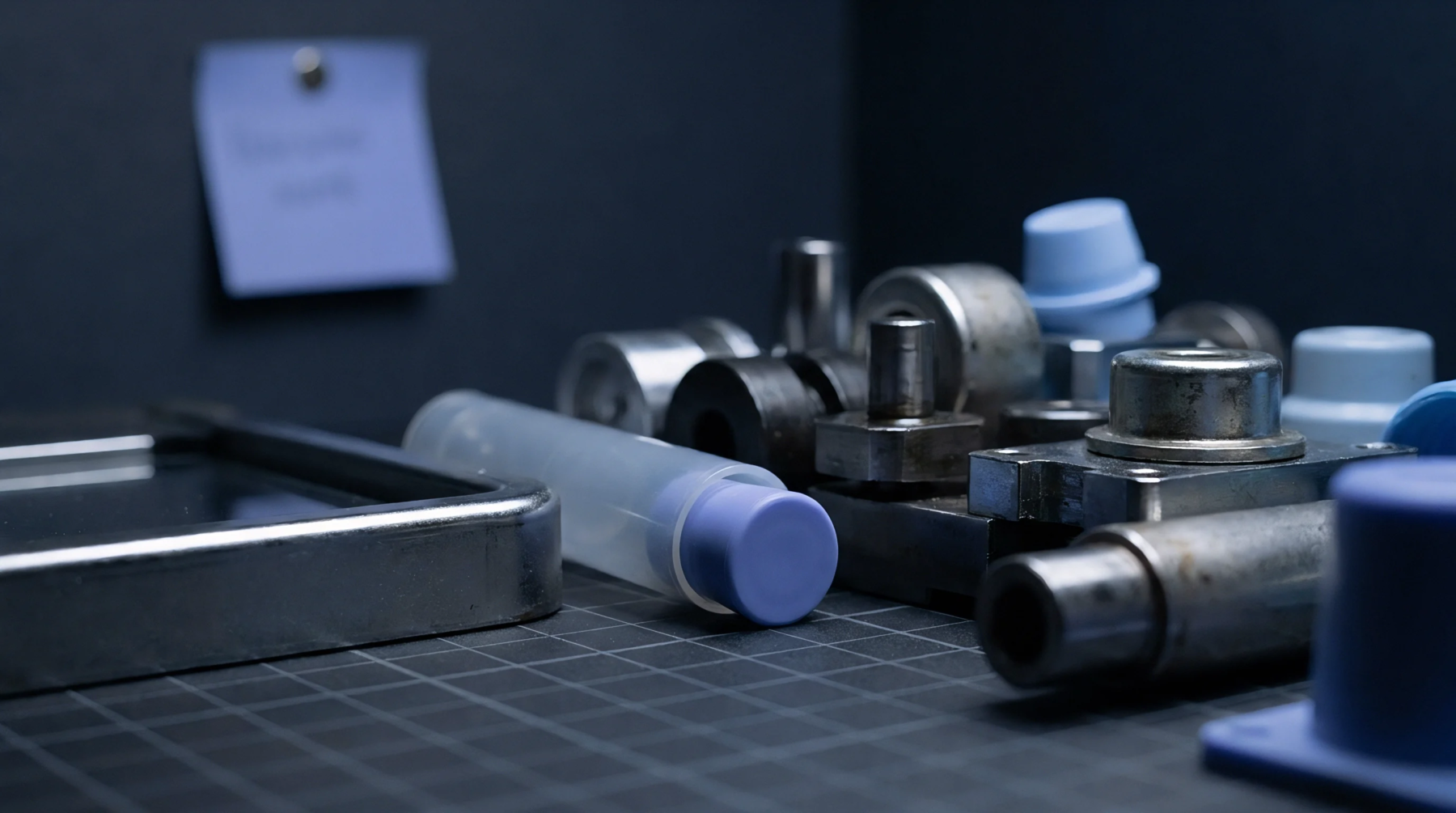
Tooling assemblies featuring internal channels mirroring cavity contours, conformal cooling inserts govern thermal dissipation rates during injection moulding cycles by maintaining uniform tool surface temperatures. These specialized metal components manage fluid flow directly beneath moulding faces to prevent localized overheating and subsequent volumetric shrinkage variations. A primary process variable controlled by this technology is melt solidification kinetics, set during the initial mould design phase and fine-tuned through coolant pressure regulation.
Thermal drift outside acceptable limits leads directly to warpage, sink marks, and residual stress concentrations in moulded articles. This boundary condition applies strictly to closed-loop liquid circulation systems operating within high-pressure steel or aluminium tooling frameworks.
Cooling Channel Geometry
Metal additive manufacturing techniques enable direct fabrication of subsurface fluid paths that follow complex three-dimensional part contours without traditional straight-drilling limitations. Turbulent flow regimes maintained within these curved pathways enhance heat transfer coefficients compared to conventional linear cooling layouts. A smaller distance between the fluid boundary and the cavity surface accelerates removal of thermal energy from thick wall sections.
Coolant velocity must remain high enough to scrub boundary layers inside narrow radii while avoiding excessive pump head pressure drops.
Cycle Time Reduction
Shorter cooling phases decrease overall machine press hours and lower energy consumption per kilogram of processed polymer material. Faster solidification rates allow parts to achieve structural rigidity earlier in the sequence, which prevents distortion during ejection. Part cost calculations benefit significantly from reduced gate-to-gate intervals despite higher initial tooling investments required for laser powder bed fusion production.
Process stability improves because thermal accumulation in mass-heavy steel sections diminishes across multi-cavity production runs.
Material Specification
Virgin engineering polymers exhibit predictable thermal conductivity values that allow precise calculation of required coolant temperatures and flow rates. Recycled polymer streams introduce melt viscosity variations that demand tighter control over tool face temperatures to maintain consistent part dimensions. Certified tool steels utilized for these inserts withstand repeated thermal fatigue cycles without experiencing micro-cracking along internal channel walls.
Part specifications dictate allowable dimensional tolerances, which fail immediately if localized thermal gradients induce uneven shrinkage across complex geometries.