Meaning
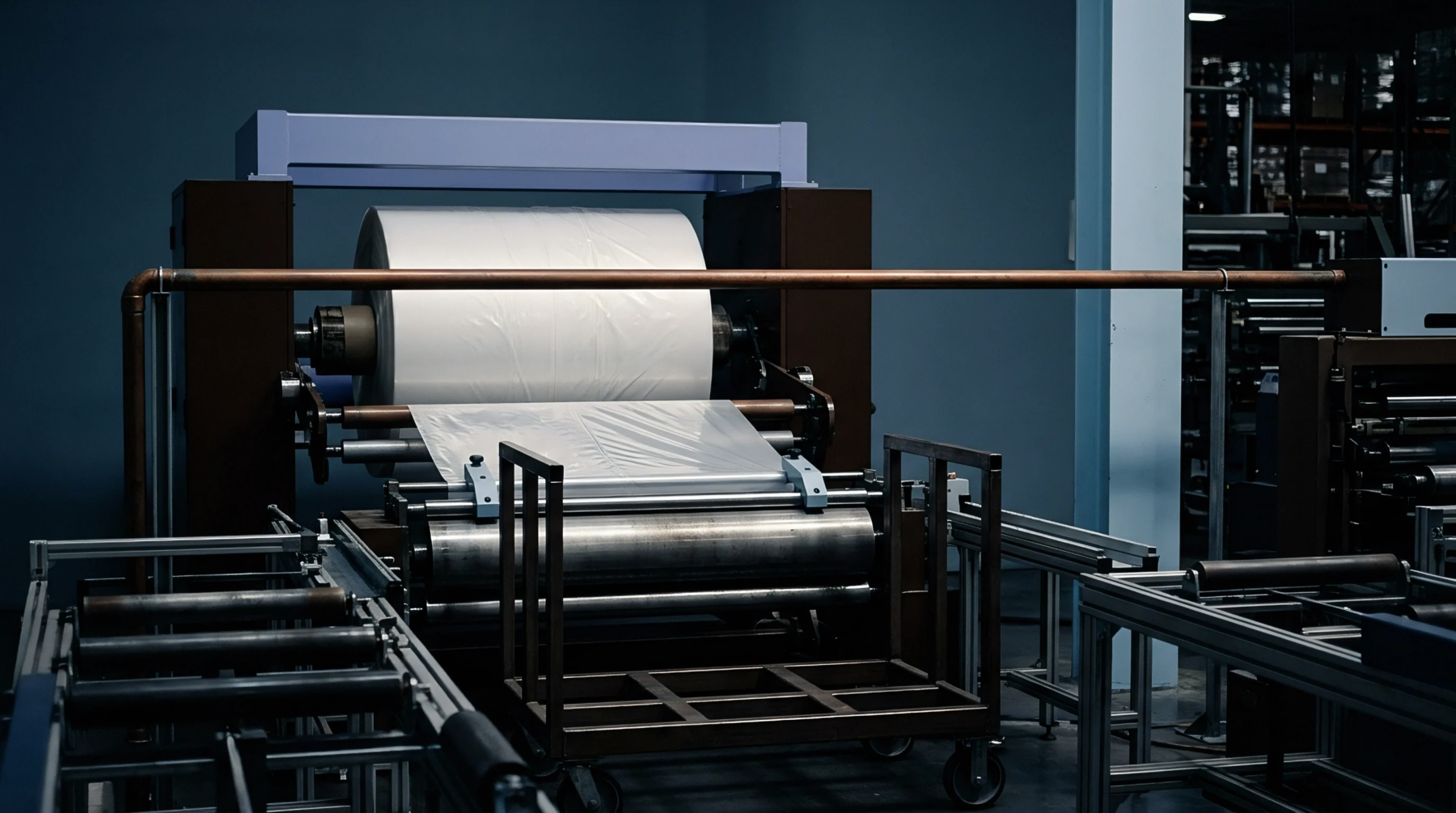
Continuous polymer film or foil feedstock provides the primary material input for conversion operations. Web stock defines the master rolls of thermoplastic resin that move through secondary processing equipment like coaters, laminators, or slitters. This material supply governs the downstream quality of finished products by setting the mechanical properties and gauge consistency before any modification occurs.
The effective use of these rolls requires stable tension control and precise alignment during unwinding.
Process Variable
Moisture content levels within the polymer matrix change how the material reacts during high temperature conversion steps. Moulders and converters select these rolls based on the specific crystallinity or additive package present in the resin formulation. A datasheet value represents the nominal property tested in a laboratory environment, yet the actual performance during a production run depends on how the equipment handles the physical load of the unspooled material.
Improper storage conditions cause the edges of the roll to curl or absorb contaminants that compromise the adhesion of subsequent coatings.
Material Specification
Resin grade standards set the upper and lower bounds for the thickness and uniformity of the supply. A part specification details the required geometry and performance of the final moulded or extruded item rather than the generic characteristics of the raw supply roll. Virgin material provides consistent processing parameters compared to regrind inputs, which often introduce thermal history and additive degradation.
Costs rise when the supply lacks the necessary uniformity to maintain a steady speed on the line because variation forces operators to slow down the equipment.
Production Boundary
Machine settings determine the maximum allowable tension that the roll structure can withstand without permanent deformation or necking. Practitioners measure the diameter of the supply during the transition from a full roll to the final core to predict when the machine requires a changeover. Running the material too close to the end of the roll introduces risks related to core tension and potential surface marks from the underlying layers.
Stable output depends on the tension profile applied to the material throughout the entire length of the roll.