Meaning
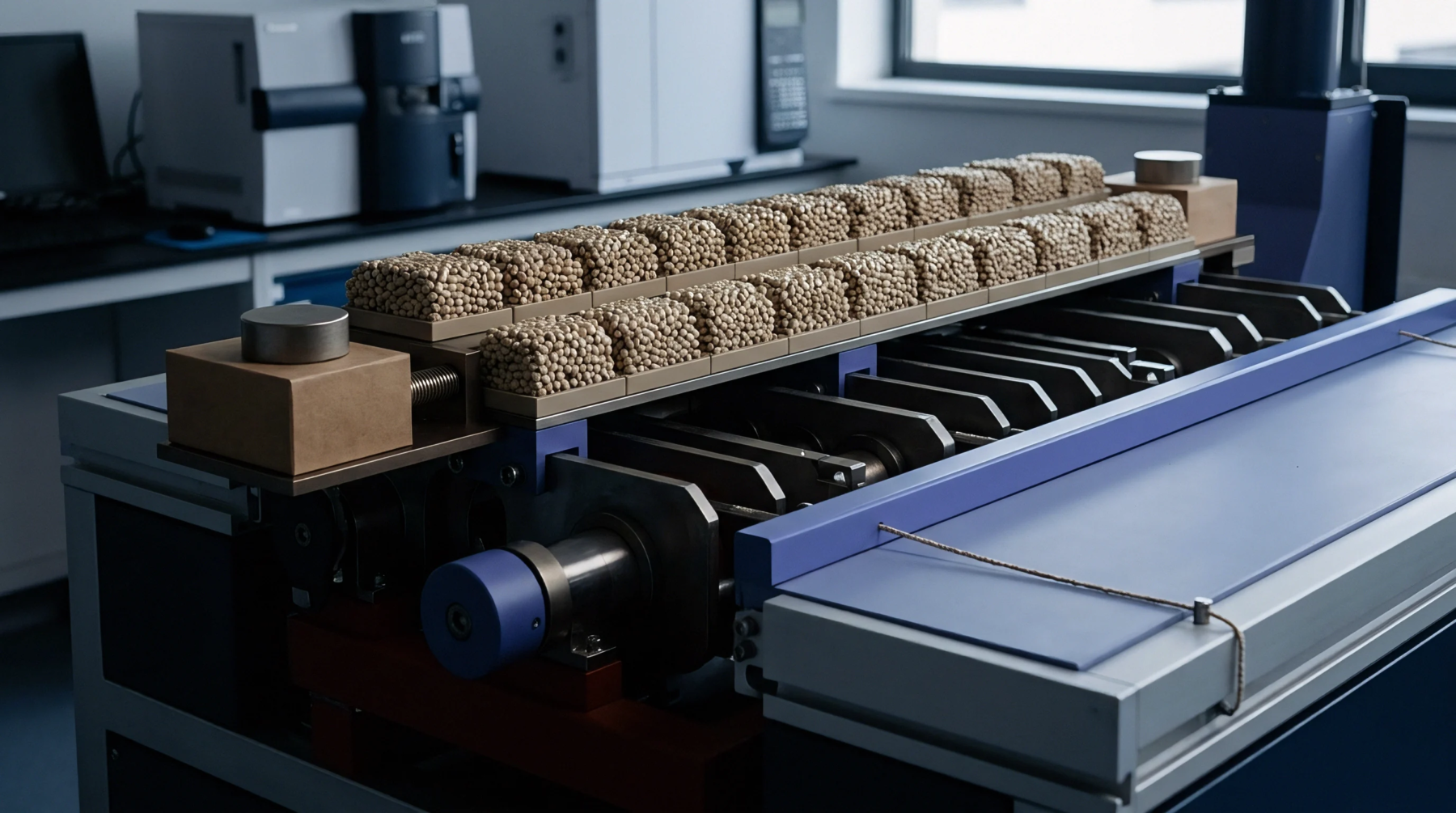
Dual-bore capillary testing instruments characterise polymer melt flow properties by running two capillary dies of identical diameter but different lengths simultaneously under identical temperature and piston speed conditions. In high-shear polymer rheology and compound verification, a twin barrel rheometer enables real-time determination of true shear viscosity and entrance pressure loss without requiring separate test runs. The instrument forces molten polymer through a zero-length orifice die in one barrel and a long capillary die in the adjacent barrel using matched drive pistons.
It governs viscosity measurements at high shear rates from 10 to 100,000 reciprocal seconds, reproducing conditions encountered in extrusion dies and injection gates. The device stops applying at extremely low shear rates below one reciprocal second, where rotational rheometers provide superior sensitivity.
Operational Architecture
Both barrels are bored into a single heated steel block, ensuring that identical thermal environments surround both test samples throughout the experiment. As the twin drive rams descend at identical speeds, pressure transducers mounted directly above each die measure the entrance pressure drop across the short orifice and the total pressure drop across the long die. Subtracting the short-die pressure from the long-die pressure directly yields true wall shear stress through the Bagley correction in a single stroke.
This dual-die setup eliminates the errors associated with thermal degradation and drift that occur when running consecutive single-bore tests across different time periods.
Shear Rate Simulation
Standard melt flow index testers measure flow at low, single-point shear stresses that do not correlate with high-velocity injection moulding processes. A twin barrel rheometer sweeps through multiple piston speeds to generate full flow curves across the shear rate spectrum typical of modern production tooling. Polymer resins exhibit strong shear-thinning behaviour, where viscosity drops by orders of magnitude as shear rates climb inside runners and thin gates.
Sourcing engineers review twin barrel viscosity curves to evaluate processing consistency between virgin polymer grades and variable regrind formulations.
Tooling Optimisation
Accurate flow data generated by dual-bore systems feeds computer-aided engineering simulation tools to optimise gate design, runner balance and injection velocity profiles. Toolmakers rely on true shear viscosity to calculate expected pressure drops across complex cavity geometry, avoiding mold flashing from excessive pressure or short shots caused by underestimated resistance. Virgin polymers display clean, predictable viscosity curves, whereas regrind lots with broad molecular weight variations reveal shear instability and melt fracture at elevated speeds.
A twin barrel rheometer provides the primary experimental flow dataset required to model and control technical injection moulding cycles.