Meaning
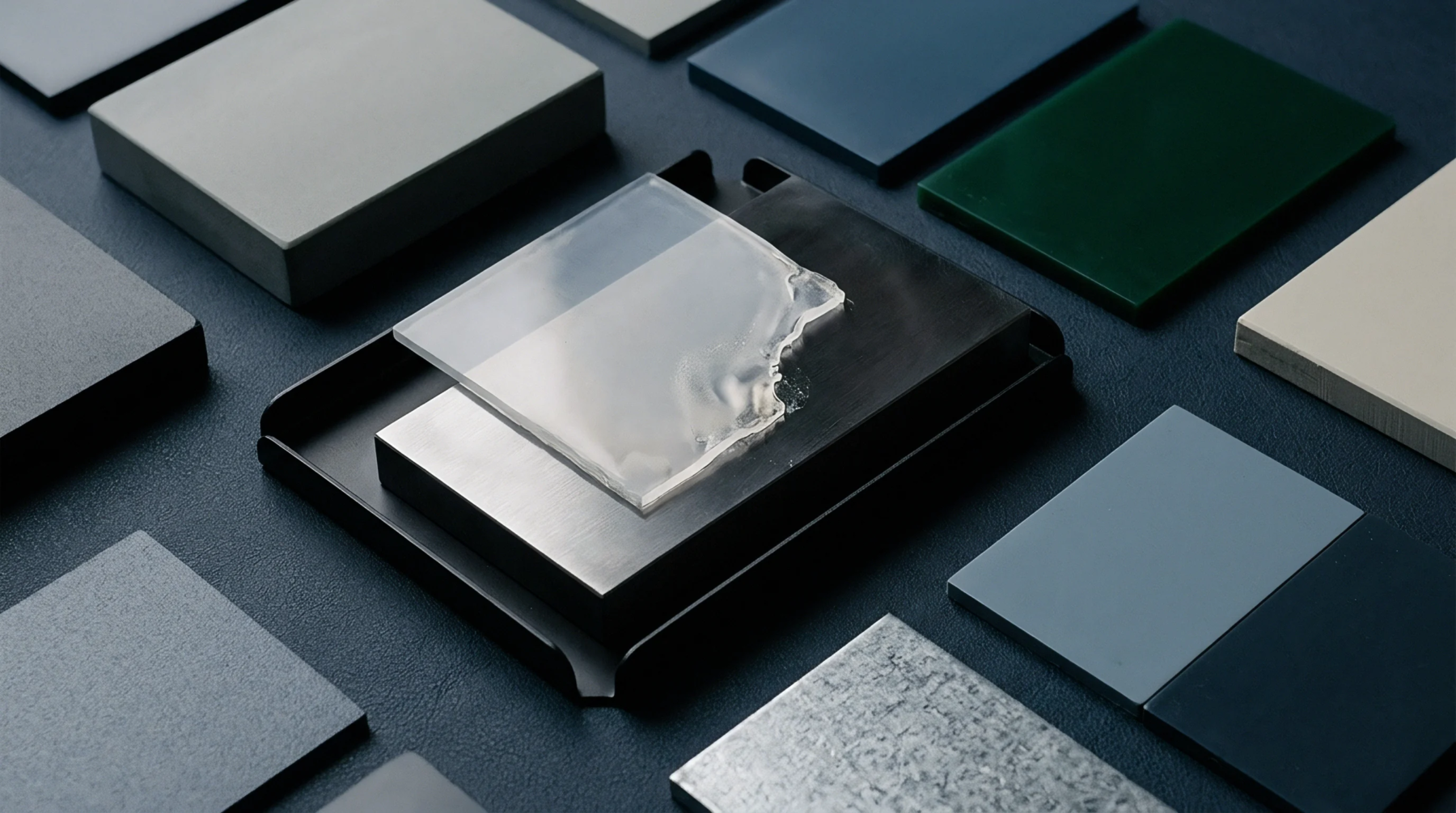
The localized surface depression that occurs in thick sections of an injection moulded part is caused by non-uniform volumetric shrinkage during solidification. This moulding defect, called a sink mark, forms when the outer skin of the part solidifies while the inner core remains molten. As the core cools and contracts, it pulls the solidified skin inward, creating a shallow depression on the surface.
It is commonly found on the opposite side of thick ribs, bosses, and internal walls.
Process Control
Moulders can minimize the formation of these depressions by adjusting the holding pressure and holding time. Increasing the holding pressure forces additional molten resin into the cavity, compensating for the shrinkage of the core. The holding phase must be maintained until the gate freezes, preventing the backflow of material.
If the gate freezes too early, the packing pressure cannot reach the thick sections, resulting in more prominent sink marks.
Design Solution
Optimizing the wall thickness of the part is the most effective way to prevent this surface defect. Designers should keep the thickness of internal ribs below sixty percent of the nominal wall thickness. This ratio prevents large thermal masses that shrink slowly and pull on the outer skin.
Using a lower-shrinkage polymer, such as an amorphous resin, also helps reduce the occurrence of surface depressions.
Thermal Optimization
Cooling channel placement affects surface quality. Mould designers place channels closer to thick regions. This promotes rapid solidification.
Uniform cooling prevents depressions.