Meaning
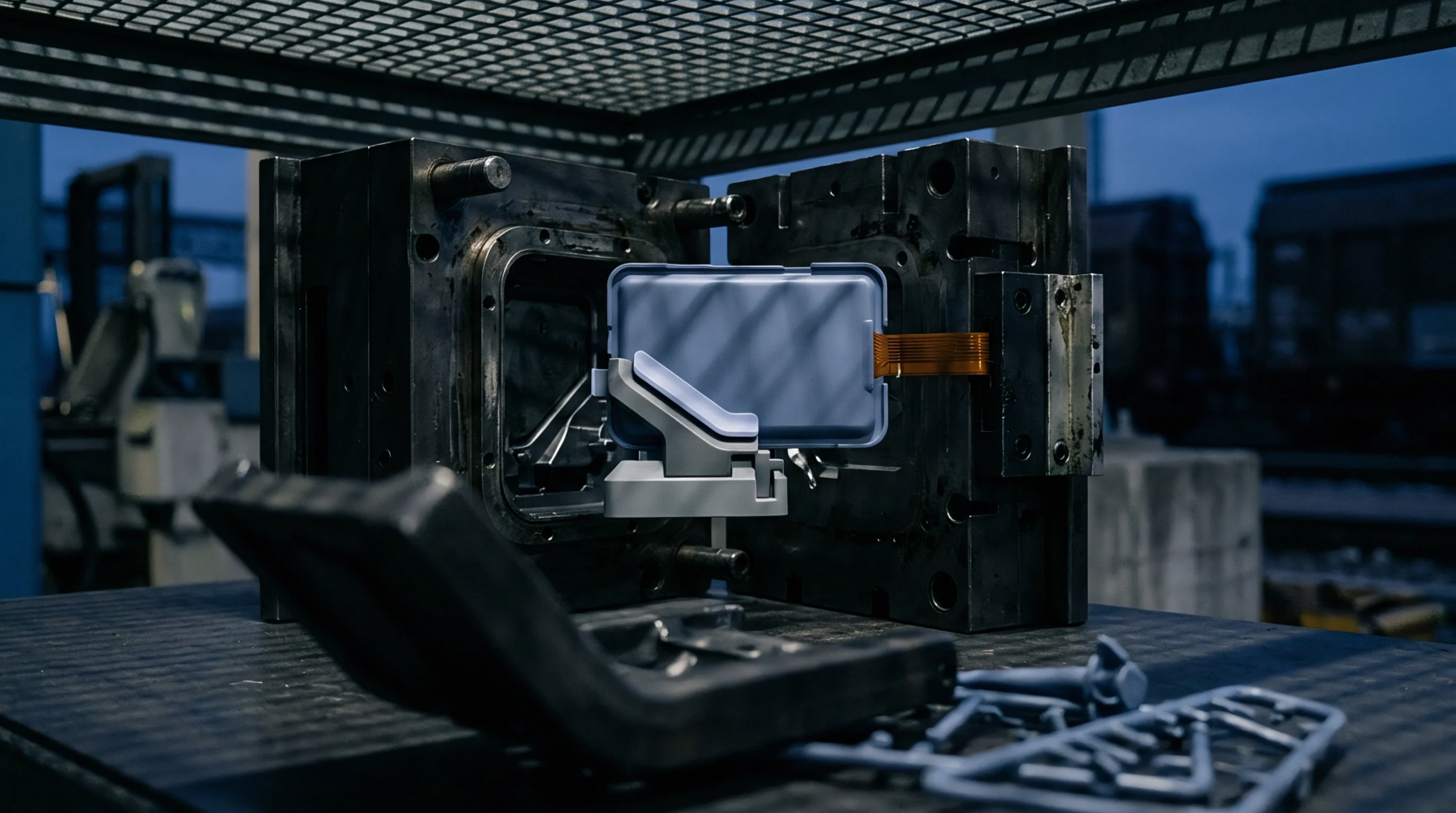
Coolant distribution systems that divide the main flow into multiple independent paths across the mold provide uniform temperature distribution at the cost of potential flow imbalance. Each branch in the system receives fluid from a common manifold and returns it to a common collection point. While parallel cooling circuits help maintain a consistent temperature across all cavities, they require careful monitoring to ensure no single path becomes blocked.
Flow Distribution
The fluid naturally follows the path of least resistance, which can lead to reduced flow in longer or more complex branches. A branch with low flow will reach a higher temperature, causing that specific cavity to cool slower than the others.
Temperature Uniformity
All cavities receive coolant at the same entry temperature, which is the primary benefit of this configuration. In contrast to a single long path where the fluid warms up as it travels, this layout keeps the thermal gradient across the mold base to a minimum. This uniformity is necessary for maintaining consistent part dimensions in multi-cavity tools.
Pressure Management
Total pressure drop across the mold is lower than in a series arrangement because the total flow is spread out. However, if the pump cannot provide enough volume to maintain turbulence in all branches, the cooling efficiency will drop. Monitoring the return temperature of each individual circuit is the best way to verify that the flow is balanced correctly.