Meaning
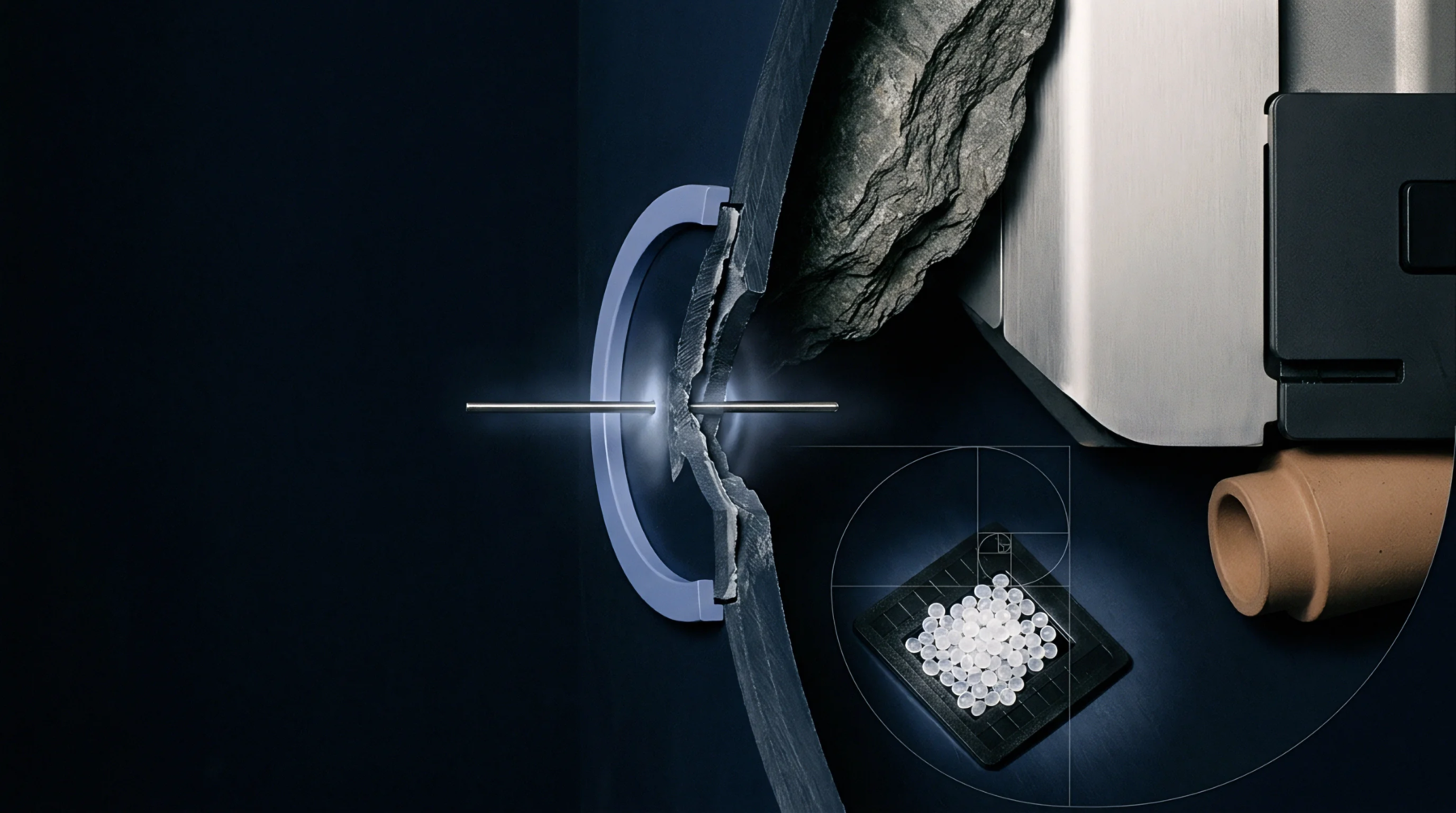
High purity glass elements placed between a sensing element and a hot melt provide thermal isolation while facilitating wave transmission. A fused silica buffer acts as a physical bridge that allows ultrasonic sensors to operate at temperatures that would otherwise destroy their electronic components. This material is chosen for its low thermal conductivity and its ability to transmit sound with minimal attenuation.
It is commonly found in transducers used for in line melt characterization.
Thermal Protection
Protection of the piezoceramic element is the main function of this component. Because fused silica can withstand temperatures exceeding 1000 degrees Celsius, a fused silica buffer keeps the heat of the melt away from the sensitive probe. This separation allows for continuous monitoring of the extrusion process without the need for water cooling systems.
Acoustic Waveguide
Waveguide properties of the glass ensure that the ultrasonic pulse reaches the polymer with high energy and minimal distortion. The length of the fused silica buffer is carefully calculated to manage the timing of the echoes and prevent signal overlap. In high frequency applications, the surface finish of the buffer must be polished to a high standard to ensure a clean interface with the resin.
Any air gap at this boundary would cause a total reflection of the signal, so the buffer is often pressed against the melt under high pressure.
Sensor Longevity
Longevity of the measurement system is improved by reducing the thermal stress on the internal wiring and the bonding layers. Without this buffer, the life of a sensor in a high temperature environment would be measured in hours.