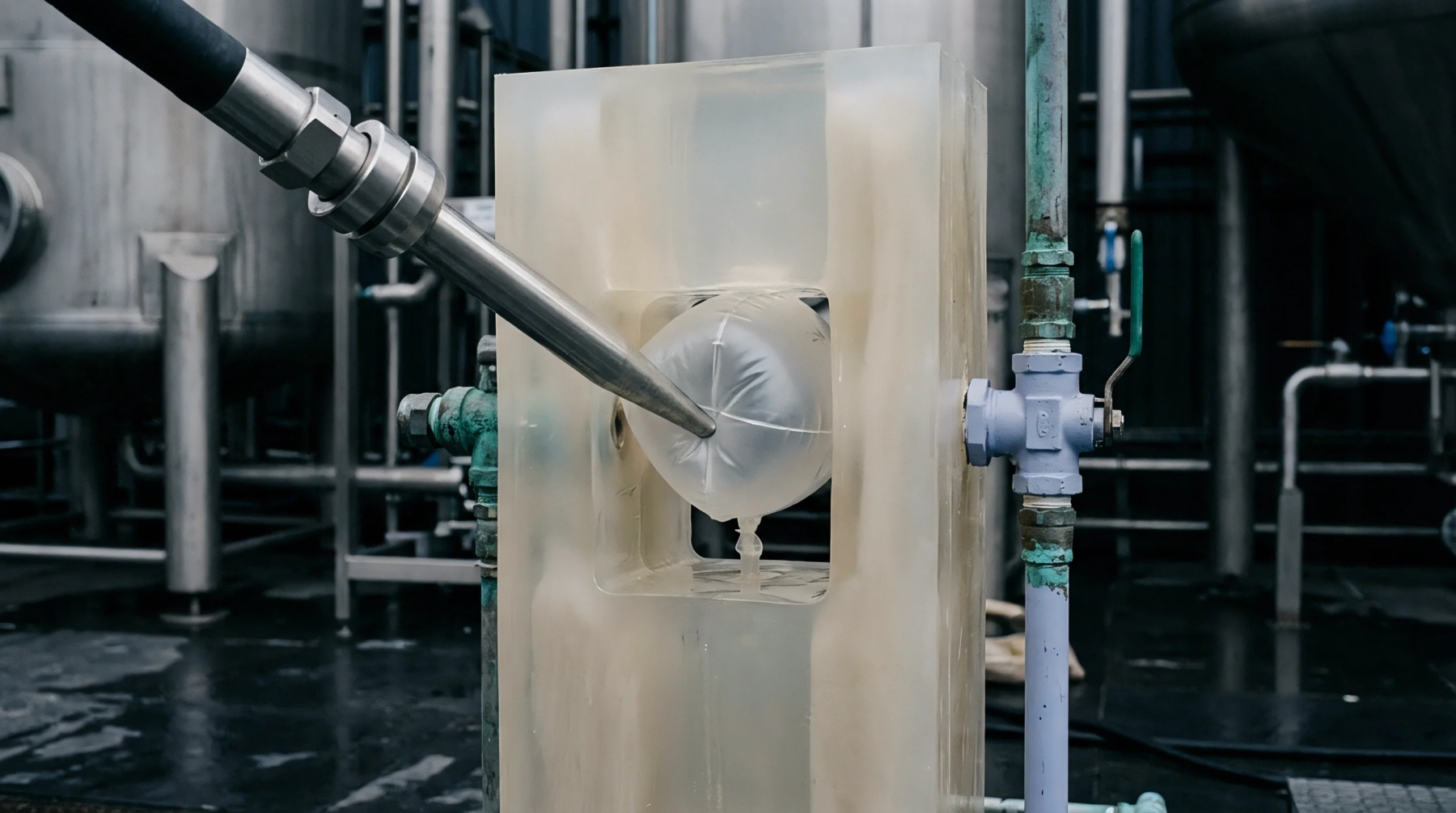
Micro Mould Cavity Pressure Sensor Placement Mechanics
Sub-millimetre cavity pressure sensor placement requires sub-two-micron pin clearances and end-of-fill installation to decouple micro-melt viscosity from V/P switchover.
Mechanical engineering defines this specific threshold as the theoretical axial load that causes a long, slender structural column to transition from stable compression to sudden lateral deflection. The euler buckling limit provides a predictive boundary for designers working with high-aspect-ratio plastic components, including standoffs, narrow ribs, or thin-walled tubular housings, where the stiffness of the material replaces the strength of the material as the primary failure mode. This analytical value depends entirely on the material modulus of elasticity, the area moment of inertia for the cross-section, and the effective length of the support.
Beyond this critical load, the component loses its load-bearing utility, even if the internal stress remains well below the yield strength of the polymer. The definition holds firm until the geometry reaches a point where shear deformation or local wall instability takes precedence over global column action.
Polymers exhibit non-linear behaviour under sustained loads because their modulus changes with temperature and time. Designers calculate the euler buckling limit using the tangent modulus or the secant modulus to account for the specific resin stiffness at the operating environment temperature. High-performance engineering resins like polyetheretherketone or glass-filled polyamides resist this failure through higher stiffness-to-weight ratios, whereas softer commodity resins require thicker walls to maintain structural integrity.
Process variables such as fiber orientation influence the local moment of inertia, as injection-molded parts possess anisotropic mechanical properties due to flow-induced alignment. Moulders manage this by controlling gate locations to ensure that fiber alignment reinforces the axis of highest load, thereby delaying the onset of instability.
Injection moulding cycles influence the final wall thickness and the resulting geometric accuracy of slender parts through cooling rate variations. If the cooling process remains inconsistent, variations in crystallinity or amorphous chain alignment produce parts with unequal wall sections, shifting the neutral axis and reducing the load capacity below the datasheet expectation. Regrind materials alter the viscosity and the effective modulus of the finished component, which forces a reduction in the load limit to ensure safety during service.
Part specifications focus on the finished geometry and its resistance to instability, while material specifications provide the base modulus values for the calculation. Tooling engineers verify these tolerances by checking the core shift and the concentricity of circular sections, because even minor deviations in wall symmetry accelerate the deviation under axial force.
Accurate prediction of this limit relies on the assumption that the component remains perfectly aligned during assembly. Any initial bow or eccentricity in the molded part acts as a lever that reduces the actual capacity compared to the mathematical result. Engineering teams perform finite element analysis to capture these geometric imperfections, yet the physical result remains the final arbiter of structural performance.
A design that operates close to the calculated buckling threshold possesses no margin for material degradation or environmental stress cracking. Proper integration of this limit into the design phase determines the long-term success of slender plastic components under constant axial compression.
Sub-millimetre cavity pressure sensor placement requires sub-two-micron pin clearances and end-of-fill installation to decouple micro-melt viscosity from V/P switchover.
Expertise is a utility, not a secret. sentiention™ publishes its working knowledge as open reference: intelligence layer covering the materials it sources, the markets it enters, and the reference that serves both.