Meaning
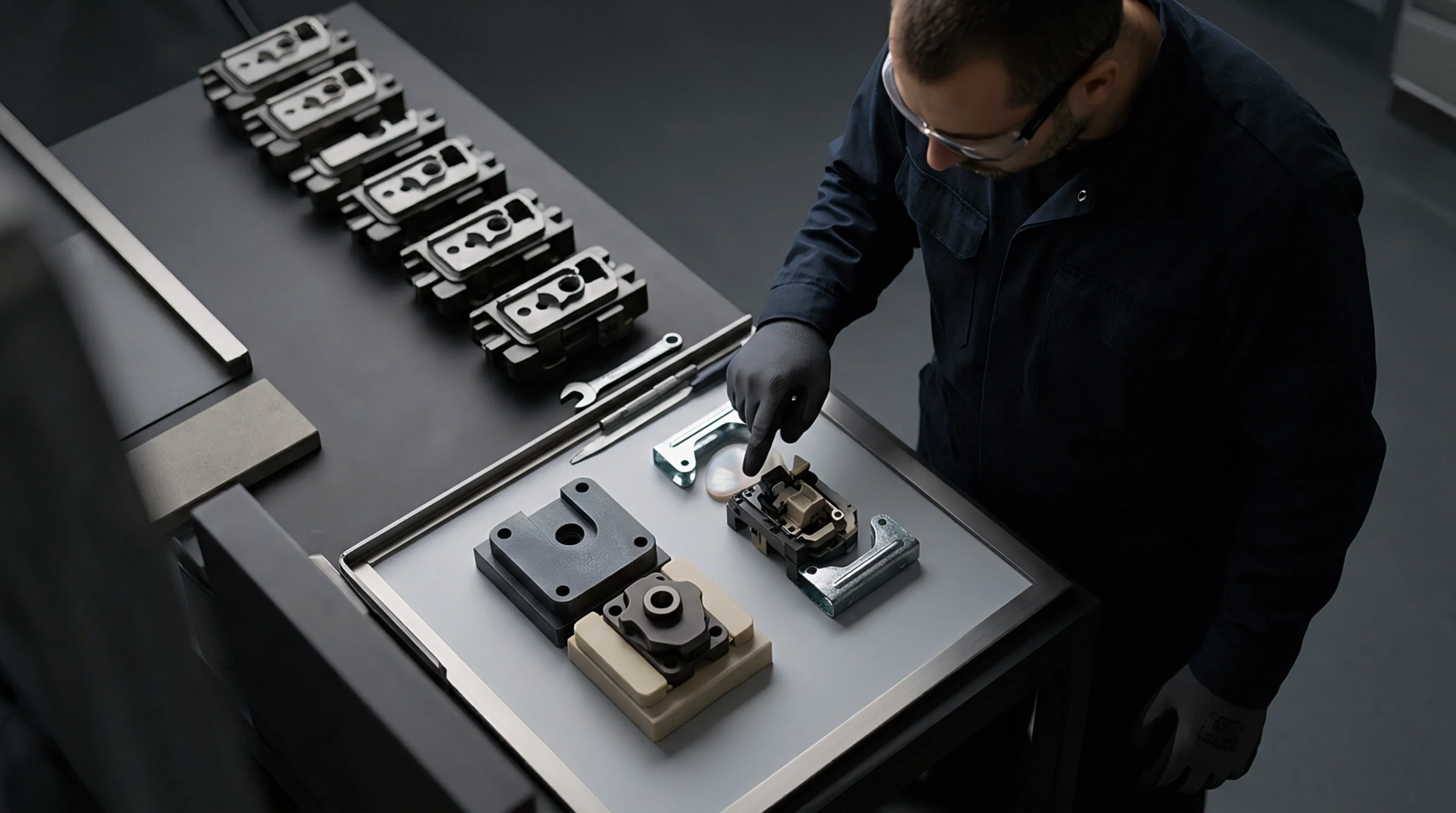
The resistance force exerted against a polymer part as it slides along the mould cavity wall during the initial stage of mechanical ejection. Demoulding friction arises from the physical interaction between the solidifying resin and the metal surface of the tooling. This property governs the required force output of ejector pins or plates to release a finished component without inducing structural damage.
Proper lubrication of the mould or adjustments to the surface roughness of the steel influence this resistance to ensure smooth cycle progression.
Processing Resistance
Surface topography and resin chemistry determine the intensity of this mechanical drag. High values for demoulding friction indicate a mismatch between the cooling rate of the polymer and the retraction timing of the mould halves. Sharp corners or deep rib sections often intensify the local binding force, requiring higher ejection pressure to prevent part deformation.
Tooling technicians monitor these resistance levels as a method to identify wear in the mould coating or shifts in the thermal profile of the cooling channels.
Production Variation
Datasheet values represent standardized testing conditions that ignore the complexity of commercial part geometry. Moulders frequently encounter higher friction levels when using regrind materials compared to virgin resin because of the alteration in molecular weight and the presence of filler impurities. Each run undergoes a drift in these values as the mould steel absorbs thermal energy and expands to slightly alter the cavity dimensions.
Controlling this variance requires precise regulation of the injection pressure and hold time to ensure the part shrinks predictably away from the cavity walls.
Ejection Efficiency
Failure to manage this force leads to white stress marks, cracks, or total part seizure within the cavity. Manufacturers minimize such outcomes by applying release agents or choosing specific polymers with internal slip additives. Excessive ejection force generates long term wear on the pins and the ejection assembly of the injection machine.
Efficient production relies on maintaining a low and stable coefficient of friction to maximize the longevity of both the finished plastic parts and the expensive metal tooling.