Meaning
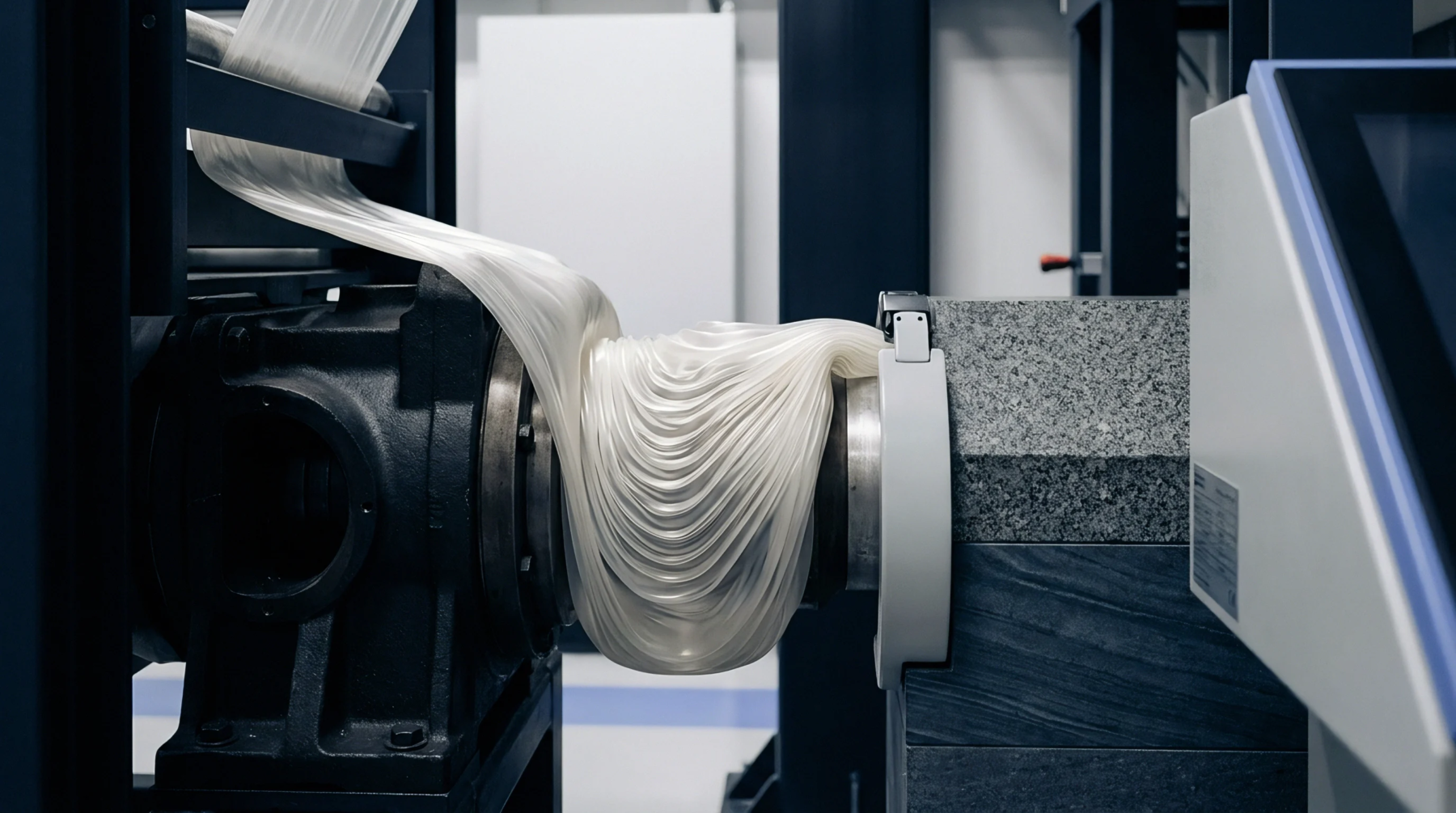
In-line extrusion measurement instruments determine molten polymer shear viscosity by measuring pressure drops along a rectangular flow channel of constant cross-sectional dimensions. In commercial plastics manufacturing, a slit die rheometer characterizes the flow properties of resin melts directly under actual processing conditions of temperature, shear rate, and pressure. The instrument measures rheology without the entrance and exit pressure losses that distort traditional capillary measurements.
It ceases to provide accurate shear flow measurements if the molten polymer undergoes significant wall slip or if the processing shear rate generates intense viscous dissipation heating that alters the isothermal state of the channel.
Apparatus Physics
Molten polymer enters an elongated rectangular slit where the ratio of channel width to channel height is at least ten to one. This extreme aspect ratio ensures that two-dimensional flow conditions dominate the channel center, allowing side-wall boundary effects to be neglected mathematically. Melt pressure transducers flush-mounted along the channel axis measure the continuous linear pressure drop along the flow path.
Volumetric throughput is captured concurrently via gear pump displacement or an inline mass flow meter. Wall shear stress is calculated directly from the channel dimensions and the measured pressure gradient. The true shear rate at the wall is evaluated using the pressure drop and volumetric flow, corrected for non-Newtonian fluid velocity profiles via the classical Weissenberg-Rabinowitsch correction.
Process Integration
Unlike offline capillary barrels that require manual sample packing and static preheating, the slit die rheometer attaches directly to compounding extruders or dedicated sampling side-streams. This configuration enables continuous viscosity auditing of filled polymers, elastomeric blends, and virgin polymer melts during production runs. The equipment captures dynamic viscosity changes caused by real-time molecular weight shifts, cross-linking reactions, or fluctuations in additive dosing rates.
Mineral fillers alter the local shear field across the channel, providing immediate feedback on masterbatch dispersion quality. Viscosity curves generated across multiple screw speeds allow processors to construct wide-range shear viscosity master curves under steady melt flow.
Operational Limits
Accurate rheological measurement demands strict maintenance of thermal equilibrium across the metal body of the die. High shear rates through narrow slit clearances generate viscous dissipation heat, which raises melt temperatures near the walls and distorts the true pressure gradient. Compressibility effects emerge when testing at very high pressures, altering melt density along the channel axis.
If polymer melts exhibit severe wall slip, common in fluoropolymer processing or highly filled polyolefin masterbatches, the assumption of zero wall velocity breaks down and produces artificially low shear viscosity readings. Operators monitor pressure transducer calibrations continually, as mechanical drift or carbon fouling against the diaphragm faces degrades calculation accuracy.