Toolroom Machining and Pocket Tolerances for In-Mould Transducers
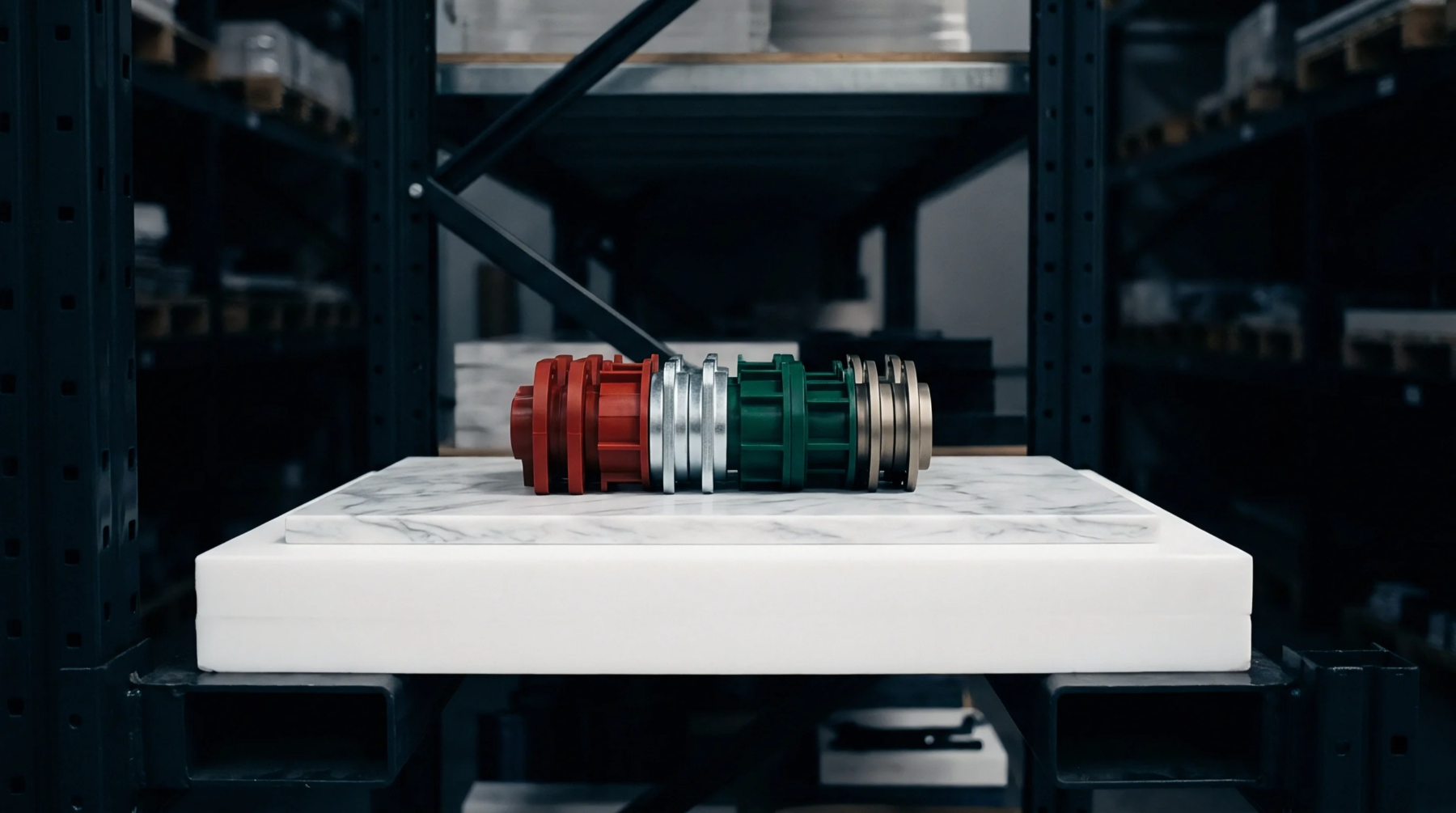
Direct sensor pocket machining holds radial clearances under five micrometers to eliminate polymer flash while maintaining sub-flush tip alignment.
Injection molding boundary interface efficiency measures the physical quality of the contact zone where two distinct melt streams or mold components meet under clamp tonnage. This localized zone determines the structural integrity of thin wall housings and transparent optical covers. Material flow fronts must rejoin uniformly while polymer temperature remains above the solidification threshold.
Insufficient contact pressure across the partition plane leads to poor molecular diffusion and premature weld line failure under mechanical load. Virgin polymer batches maintain predictable melt flow indices that support consistent interdiffusion, whereas degraded regrind introduces viscosity shifts that disrupt interface knitting. Processing parameters govern this phenomenon directly through injection speed profiles, holding pressure durations, and barrel thermal gradients.
Hydraulic clamping units apply specific tonnage to counteract internal cavity pressures generated during high velocity polymer injection. Excessive clamp force compresses venting channels and traps volatile gases, producing localized surface burns and incomplete molecular bonding. Insufficient clamp force allows the parting line to open slightly during packing stages, generating unwanted flash and dimensional distortion on the finished component.
Molders adjust switchover points from first stage injection to second stage holding to stabilize flow front advancement across the parting line. Transducer feedback loops monitor real-time cavity pressure traces to detect parting line separation before short shots occur. Resinous compounds with high melt flow rates demand precise pressure reduction ramps to prevent flashing along intricate geometry.
Mold temperature uniformity dictates the rate of polymer solidification within the boundary interface zone. Uneven cooling circuits create localized shrinkage differentials that induce internal residual stress and warpage across the finished part. Coolant flow rates and manifold temperatures require constant calibration to maintain steady state thermal equilibrium through high volume production cycles.
Thermoplastic polyesters demand elevated mold temperatures to ensure adequate molecular mobility across the weld line before freezing occurs. Low tool temperatures accelerate skin layer formation, restricting the necessary molecular entanglement between converging melt fronts.
Flashing along the parting line wastes raw material and increases secondary trimming labor costs for automotive and appliance components. Conversely, incomplete boundary knitting produces brittle parts that fail internal burst tests and increase scrap rates during quality audits. Datasheet values for tensile strength assume perfect interfacial bonding, but shop floor realities involve thermal fluctuations and moisture variations in hygroscopic resins.
Operators balance regrind percentages against virgin material ratios to control melt viscosity and preserve structural performance at the interface. Material specification sheets establish baseline property minimums, while production part approval processes verify that molded components meet stringent impact resistance criteria under cyclic loads.
Direct sensor pocket machining holds radial clearances under five micrometers to eliminate polymer flash while maintaining sub-flush tip alignment.
Expertise is a utility, not a secret. sentiention™ publishes its working knowledge as open reference: intelligence layer covering the materials it sources, the markets it enters, and the reference that serves both.