Meaning
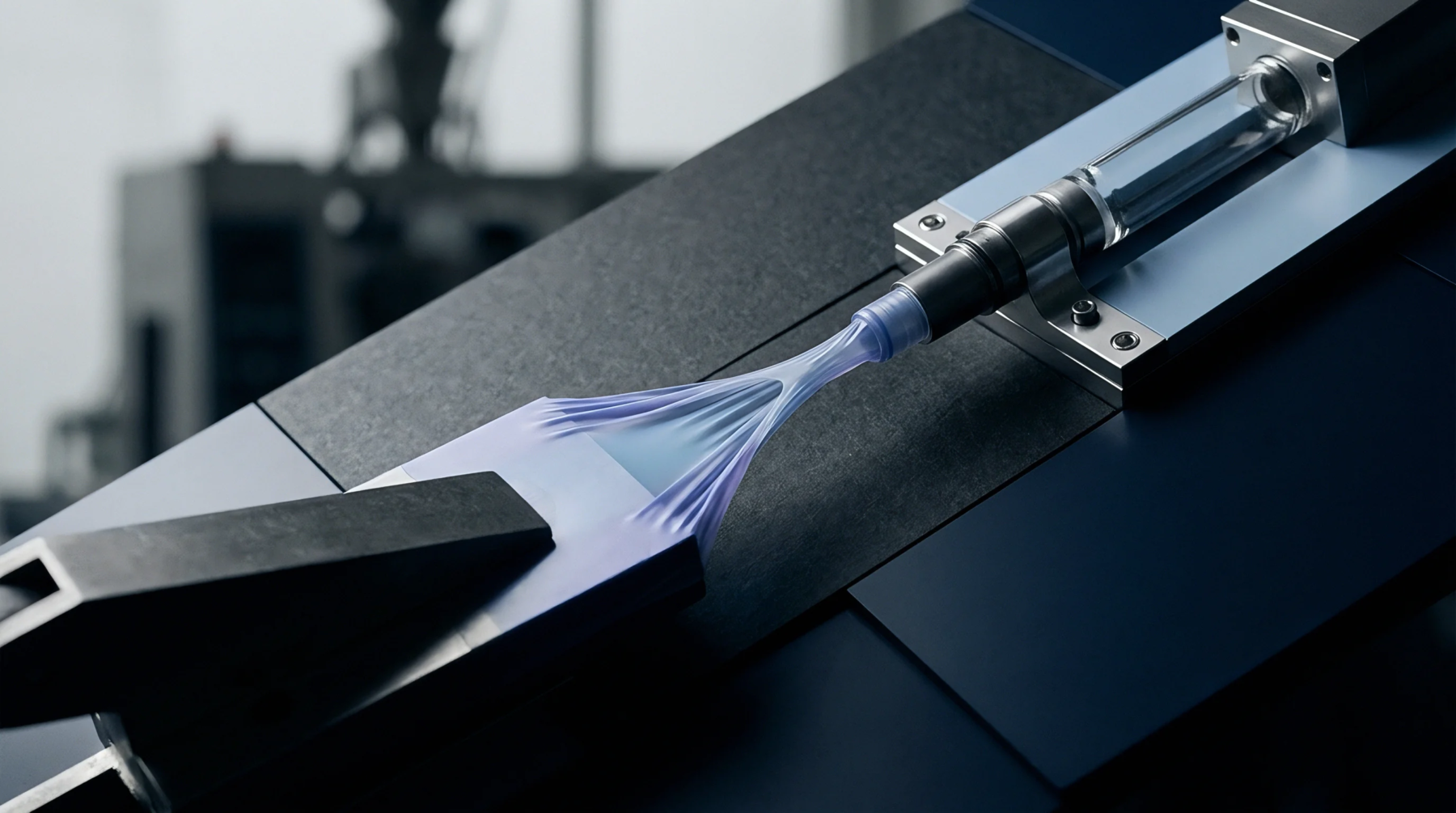
Valve gate actuation in injection moulding relies on needle stroke profiling to control the rate at which molten polymer enters a cavity. Hydraulic actuators or servo motors drive the steel pin forward and backward during the shot, shaping the volumetric flow across specific time intervals. Precision timing governs this mechanical displacement to eliminate surface blemishes and gate blush on high gloss components.
Polycarbonate and amorphous thermoplastics demand exact positioning profiles because thermal degradation occurs if shear rates spike during early acceleration.
Stroke Mechanics
Hydraulic pressures or servo commands translate into physical displacement of the shut off pin inside the hot runner nozzle. Linear encoders track the position of the shaft with microscopic accuracy throughout the injection phase. Acceleration ramps prevent the sudden shock waves that fracture polymer chains within the gate orifice.
Deceleration profiles feather the tip back onto the seating land just before cavity pack out finishes, ensuring zero vestige height on the moulded part.
Defect Prevention
Uncontrolled pin movement causes severe structural and aesthetic anomalies that scrap entire production lots. Sinking and warping appear when flow fronts accelerate erratically through restricted apertures during the filling stage. Surface blemishes such as tiger striping vanish once linear velocity matches the rheological profile of the specific resin grade.
Viscosity shifts in regrind blends require continuous adjustment of the displacement curve to maintain dimensional stability across long production runs.
Economic Constraints
Tooling longevity depends heavily on precise control parameters because mechanical wear destroys the tight tolerances of the gate land. Excessive forward velocity accelerates abrasive erosion of the steel pin and the surrounding bushing insert. Virgin material costs demand lower scrap rates, which justifies the higher capital investment in closed loop servo actuation systems.
Component specifications dictate the acceptable window for valve pin movement, directly tying machine capability to part pricing strategies.