Meaning
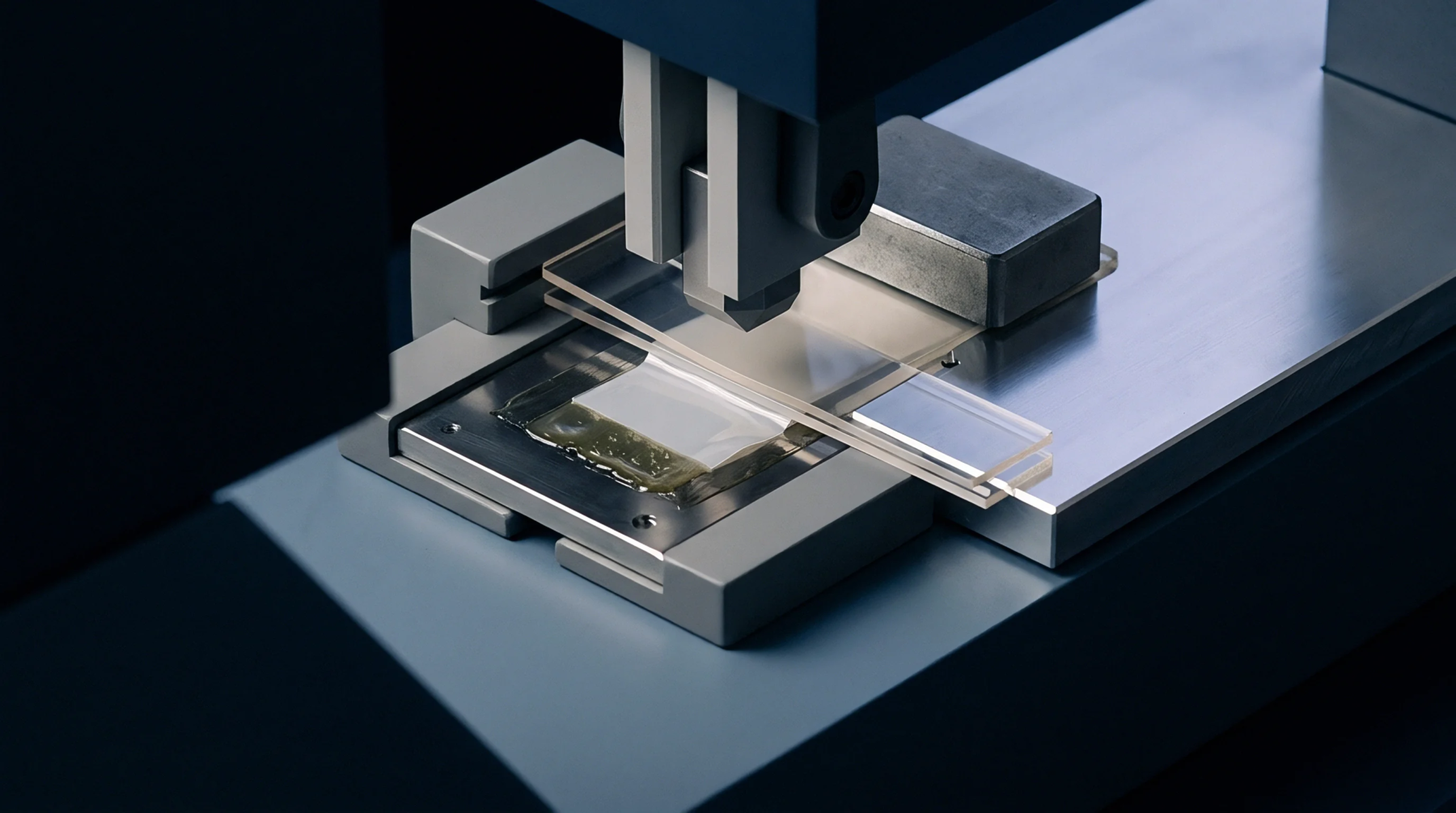
Radiant energy transfer raises the temperature of polymer sheets or preforms before molding. Utilized in thermoforming and blow molding, infrared preheating delivers rapid and targeted heat to the polymer surface. This step is conducted before the material is moved to the forming station where vacuum or pressure is applied.
It is not suitable for thick, low-conductivity polymer blocks where the rapid surface heating can cause thermal degradation before the core reaches the forming temperature.
Energy Absorption
Polymer resins absorb infrared radiation at specific wavelengths that correspond to their chemical bonds. Tuning the emitter wavelength to match the absorption spectrum of the resin optimizes energy efficiency. If the emitter temperature is too high, the sheet surface can degrade before the heat conducts through to the center.
This mismatch results in surface defects such as blistering or discoloration in the finished part.
Cycle Reduction
In thermoforming lines, heating the sheet accounts for the majority of the cycle time. Using radiant heaters instead of convection ovens reduces the heating time by a factor of three or four. This rapid heating allows for higher production speeds and lower energy costs per part.
Additionally, the quick response time of infrared emitters allows the heating profile to be adjusted dynamically between cycles.
Heat Distribution
Zone-controlled heaters permit the creation of a tailored temperature profile across the sheet. This zoning ensures that areas of the sheet that undergo deep drawing receive more heat, while areas that need to remain thick are kept cooler. Consistent preheating is required to prevent wall-thickness variation and part failure.
Proper zoning also reduces the stress levels in the formed part, which improves its long-term dimensional stability. In blow molding preforms, this method is used to adjust the axial temperature profile, which allows the material to stretch uniformly during the stretch-blow molding process. The temperature of each zone is monitored by non-contact infrared pyrometers that feed back to the heater controller to maintain a constant temperature profile.