Meaning
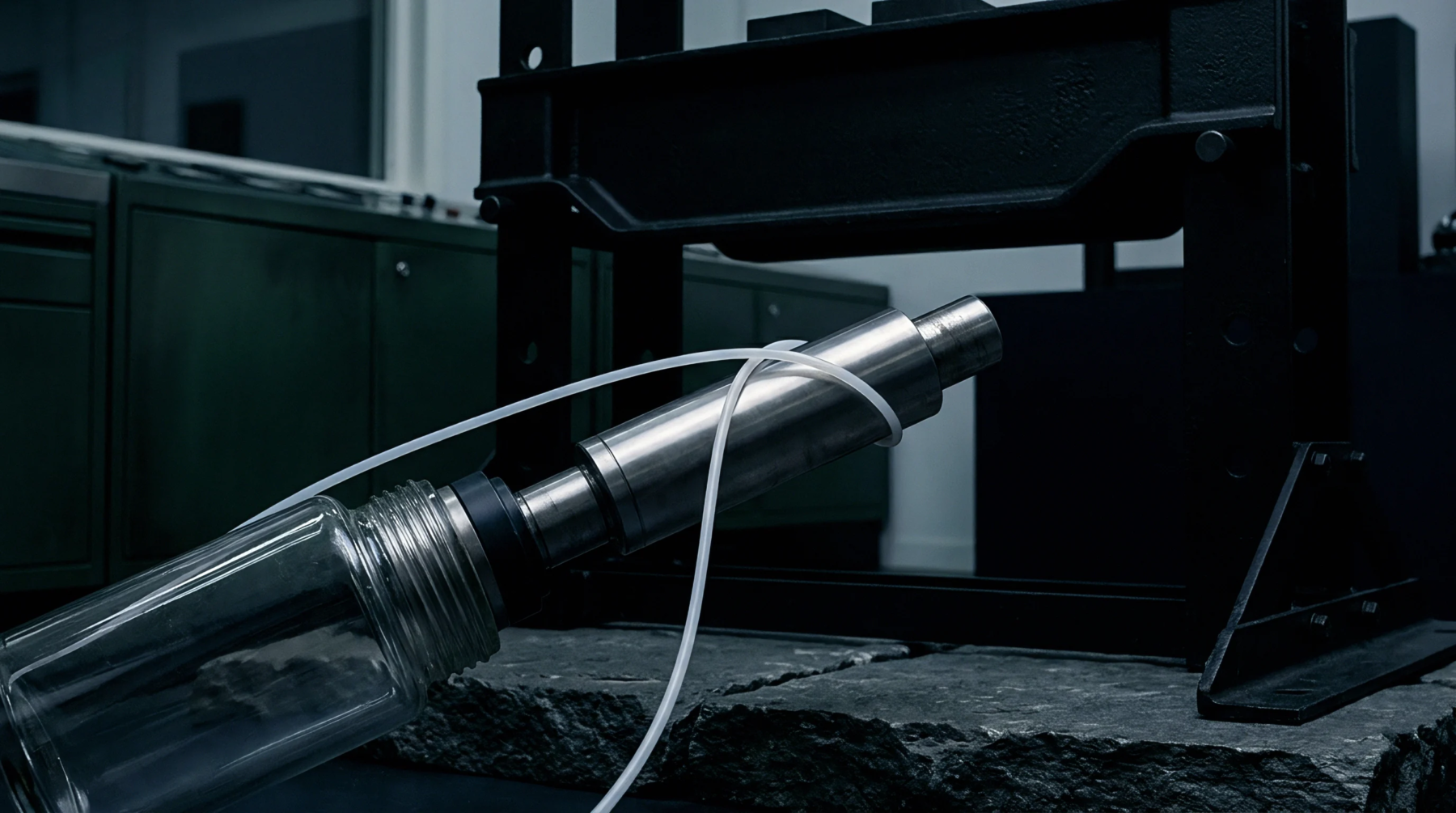
A piezoelectric sensor instrument measures dynamic cavity melt pressure by monitoring the axial compressive force transmitted through an active ejector pin during the injection cycle. Installing ejector pin transducers allows moulders to monitor cavity filling, packing pressure, and gate freeze-off without drilling direct sensor holes through the cavity face. This non-destructive mounting method preserves pristine aesthetic part finishes while capturing real-time in-cavity pressure profiles.
Process engineers utilize sensor data to trigger automatic switchover from fill to pack based on actual cavity pressure rather than screw position.
Pressure Sensing
Molten polymer exerts force on the head of the ejector pin, which transfers the force down its shaft to the piezoelectric quartz element placed behind the pin end. The sensor converts mechanical strain into an electrical charge proportional to cavity pressure. Utilizing ejector pin transducers enables precise measurement of peak cavity pressure during the packing phase.
Differences in pin friction or bending along the pin bore can introduce force losses that offset absolute pressure readings.
Process Optimization
Closed-loop machine control systems use real-time pressure feedback to compensate for resin viscosity variations between virgin material and regrind blends. When melt viscosity drops, injection pressure peaks earlier, prompting the machine controller to reduce hold pressure and avoid part flash. Employing ejector pin transducers ensures consistent part weight and dimensional stability across shifting environmental conditions.
Data logged during production runs serves as quality documentation for critical medical or automotive components.
Signal Accuracy
Calibration factors account for pin surface area and mechanical transmission losses between the pin tip and the transducer head. Pre-loading the sensor assembly during tool assembly eliminates mechanical play and prevents signal drift. Installing calibrated ejector pin transducers provides reliable cavity monitoring throughout long-term manufacturing campaigns.