Meaning
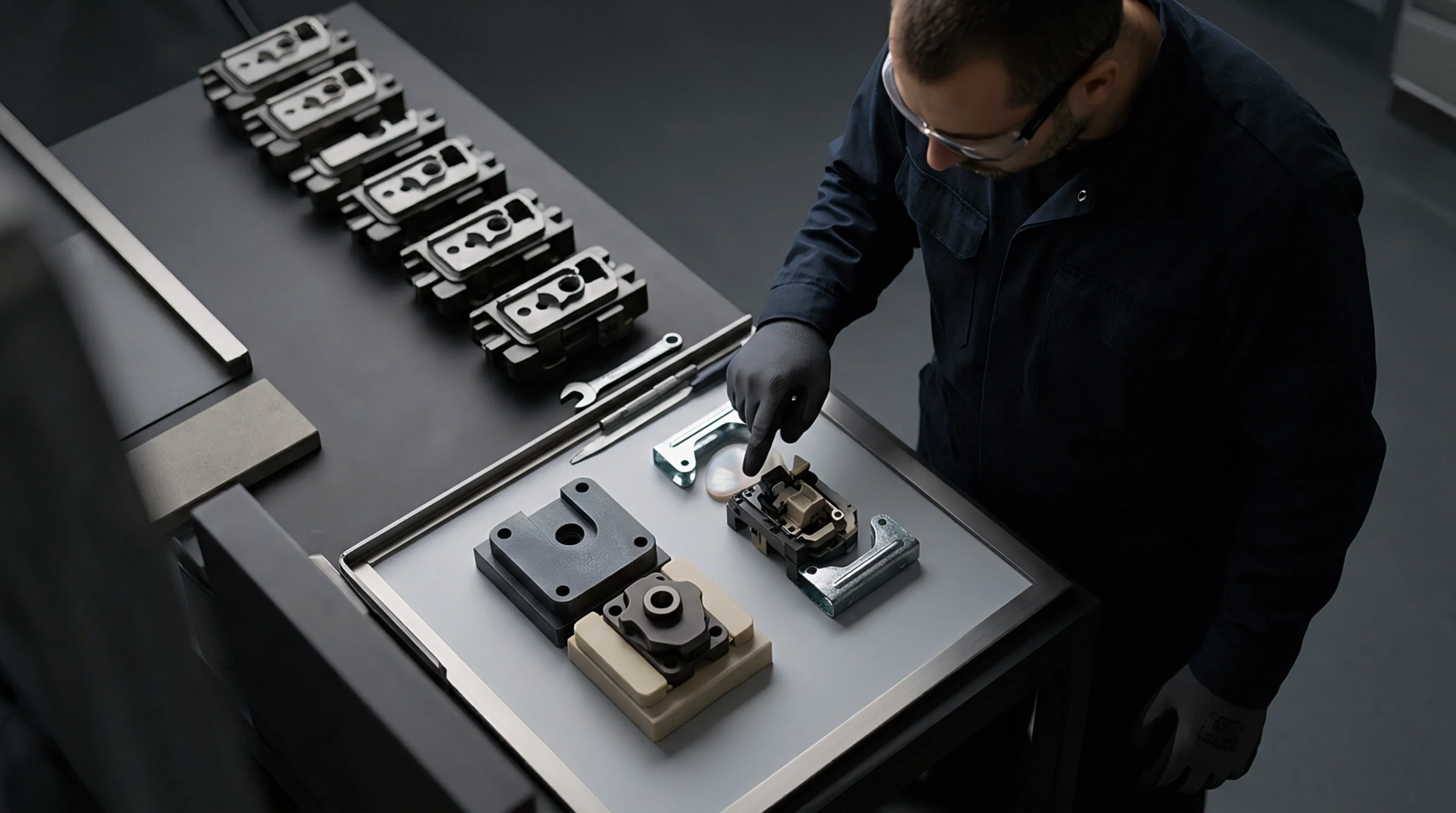
Elastic deformation of slender steel core inserts under asymmetric melt fronts distorts internal wall thickness in moulded components. High injection pressure pushing against unsupported pins causes core pin bending during the initial cavity filling phase. Distorted pins yield eccentric internal geometries, non-uniform cooling rates, and structural failure in deep tubular parts.
Wall Eccentricity
Asymmetric melt flow creates unequal hydraulic forces on opposing sides of internal cores. Severe core pin bending causes thin side walls on one side of a tubular part and thick walls on the opposite side.
Gating Strategy
Balanced flow paths entering the mould cavity reduce lateral mechanical force acting on internal cores. Minimizing core pin bending requires placing gates symmetrically relative to slender steel pins or utilizing differential gating speeds. Multi-gated cavities balance melt pressure fronts, holding core pins in central alignment throughout the filling sequence.
Advanced flow simulation software predicts transverse forces on core pins before steel cutting begins, allowing tooling engineers to increase pin diameter or add core supports.
Material Selection
Material yield strength determines how well core pins resist permanent deformation under plastic flow stresses. Susceptibility to core pin bending decreases when using high-modulus tool steel alloys or tungsten carbide cores for high aspect ratio features. Stiffer core material preserves tight wall tolerances without requiring slower injection speeds.